
If your child looks wiped out at breakfast but turns into a bright-eyed owl at 9:30 pm, you're not imagining things. Many parents feel like bedtime has changed. It's louder, more wired, and, in many ways, more complicated than it used to be.
One attention-grabbing explanation comes from Sweden, where a registry study tracked specialist diagnoses of sleep disorders over time. The biggest jump showed up in school-age kids and teens, rising sharply from the early 2000s into the 2020s. The researchers noted that this rise happened alongside the mass move to smartphones, always-on WiFi, and more 4G and 5G infrastructure.
"Wireless radiation" here means radiofrequency (RF) energy, the invisible signal used by phones, WiFi routers, tablets, baby monitors, and mobile networks. Screens add their own punch through light, stimulation, and late-night habits. The Swedish data can't fully prove what caused the trend, but it does raise a critical question: are we building bedrooms that keep young brains on alert?
What the Swedish data shows
The Swedish study used national health register data from 2001 to 2024. Instead of asking people how they slept, it tracked diagnosed sleep disorders recorded in specialist care, using an ICD-10 sleep disorder code (G47). That makes it less about "I had a bad week" and more about "this became serious enough to show up in the health system".
Here's the headline pattern reported by the researchers, simplified into the age groups most parents care about.
| Age group | Approximate rise in diagnosed sleep disorders (2001 to 2024) |
|---|---|
| 0 to 4 | About 5-fold |
| 5 to 19 | About 17-fold |
| 20 to 39 | About 5-fold |
The standout data is ages 5 to 19. A roughly 17-fold increase is not a gentle drift, it's a steep climb. The study also describes an acceleration after around 2009, especially in school-age kids.
Now, the important brakes. Registry trends can shift for lots of reasons:
- Doctors may diagnose and code sleep problems more often than before.
- Families may seek help sooner, especially with school pressure and mental health awareness.
- Lifestyle has changed, including later bedtimes, less outdoor time, more stress, and more evening light.
- The register does not include personal RF exposure measurements (no "this child's router was in their room" type detail).
Even with those limits, big registry trends can act like an early warning buoy out past the break. It doesn't tell you which wave hit you, but it does tell you the sea state changed, and it's worth paying attention.
Why the 'after 2009' acceleration matters for families today
Around 2009, the home tech vibe shifted. Smartphones became normal. Tablets hit living rooms and back seats. Streaming replaced scheduled TV. Gaming went from "after school" to "always on".
That matters because sleep problems can show up fast. You don't need decades for a kid to start waking at 2 am, or to lie there buzzing after an argument in a group chat. Parents often notice a change within days when devices creep into the bedroom routine, especially on school nights.
So while the Swedish study can't say "phones caused this", the timing matches something most families recognise: the move from occasional screen time to constant access.
Sleep and memory often travel together
The same Swedish research team has also pointed to rising concerns about memory complaints in young people. That link makes intuitive sense, even without blaming RF or screens as the sole driver.
Sleep is when the brain files the day away. Kids learn all day, then their brains need quiet, deep sleep to lock in new skills. When sleep gets chopped up, the next day can look like:
Poor focus, more irritability, and that "I can't remember what you just said" vibe that gets labelled as attitude.
If you want to see what the researchers reported on memory trends, there's a related paper here: memory problems in Swedish and Norwegian youth. It doesn't prove a single cause either, but it strengthens the case for taking youth sleep seriously.
Two sleep disruptors that often stack up, wireless radiation and screens
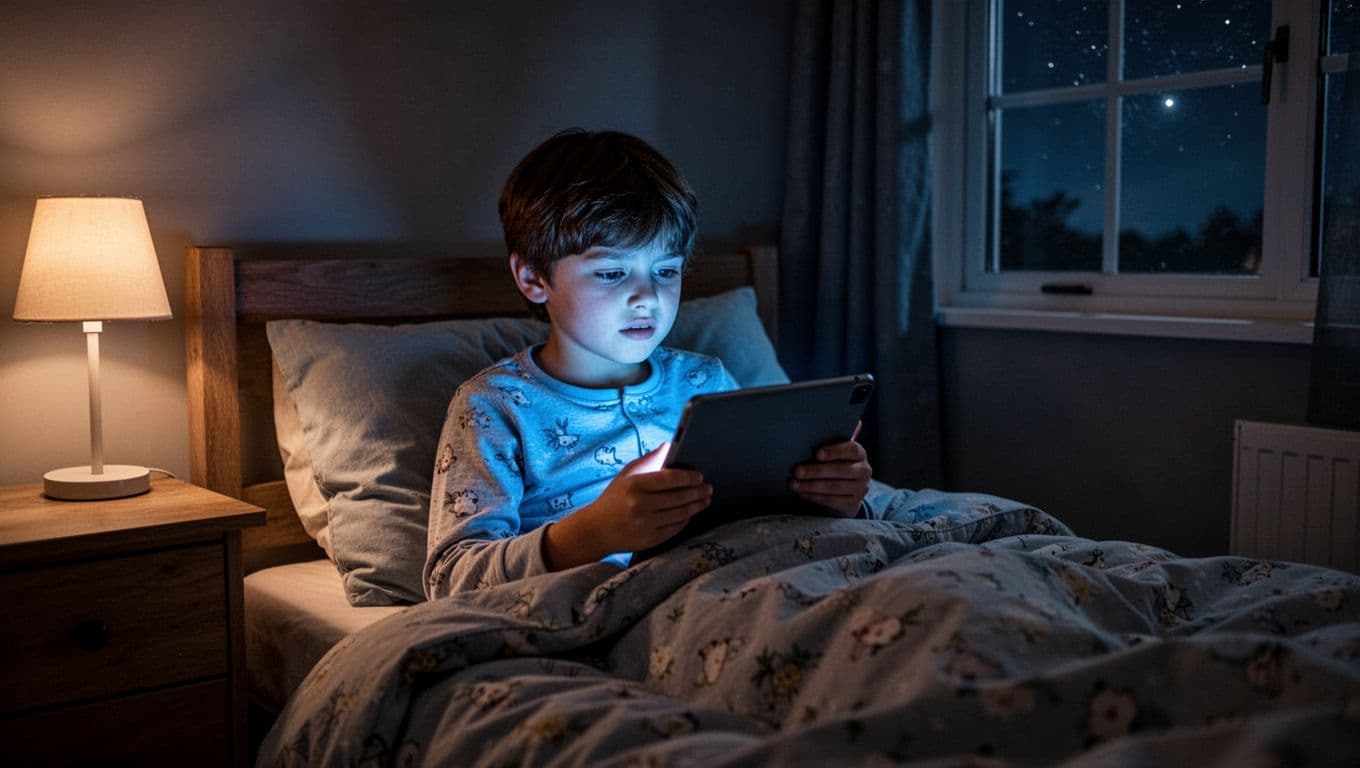
When parents tell me, "It's like their brain won't switch off", I usually picture two dials turned up at once.
First dial: RF Exposure. RF is the energy used to send wireless signals. Common home sources include phones, tablets, WiFi routers, smart speakers, Bluetooth gear, and baby monitors. Most of it is low power, yet it's also close to the body, especially at night when kids hug devices like teddies.
Second dial: Screens. Screens bring light to the eyes at the wrong time, plus stimulation. That's not just the video itself. It's the notifications, the endless scroll, the "one more level", and the social heat of messages.
Also, not all screen time is equal. Daytime homework on a laptop is different from TikTok in bed with lights off. The bedtime version hits harder because it pushes right on the body clock.
One more nuance worth saying out loud, without turning it into fear. Children's bodies are still developing. Their tissues differ from adults, and their heads are smaller. Some researchers argue this can change how RF energy is absorbed. That doesn't mean panic, but it does support using simple distance and downtime rules at night.
How RF exposure could affect sleep quality (what lab studies have found)
Controlled sleep studies are tricky, but they're useful because they can isolate one factor at a time. Some lab research has reported changes in brain activity during sleep after RF exposure, including signals that look like the brain stays a bit more "on" during stages where it should be deeply restful.
There's also research looking at RF in home settings. For example, this peer-reviewed study discusses links between wireless exposures at home (including phones and cordless devices) and sleep outcomes in children: RF exposure at home and sleep problems in 7-year-olds. It's not a perfect study, but it shows why scientists keep studying this.
A fair summary is this: the science is still developing, yet enough signals exist to justify a precaution approach in bedrooms, especially because the fix can be simple and cheap.
If you want a broader overview of the sleep research debate, this article collects strands of evidence and concerns in one place: emerging evidence on RF radiation and sleep.
Screens at night, blue light, melatonin, and 'just one more video'

If RF is the invisible signal, blue light is the visible one that hits straight through the eyes. In the evening, your child's body starts building melatonin, the hormone that helps the brain feel sleepy. Bright, cool-toned light can delay that signal, which shifts sleep later.
Then there's the behaviour part, which might be the bigger deal for most families. Even "nice" content can hype the brain. Messages and notifications add urgency. Fast edits and loud audio keep attention locked. So the body is tired, but the mind is sprinting.
Large studies and reviews often find the same pattern: bedtime screen use links with shorter sleep, poorer sleep quality, later bedtimes, and more daytime sleepiness. A recent example tracked how screen time relates to sleepiness over time in adolescents: screen time, bedtime, and daytime sleepiness. You don't need to read it cover to cover to get the point, the trend is consistent.
A parent's action plan for better sleep, without banning technology
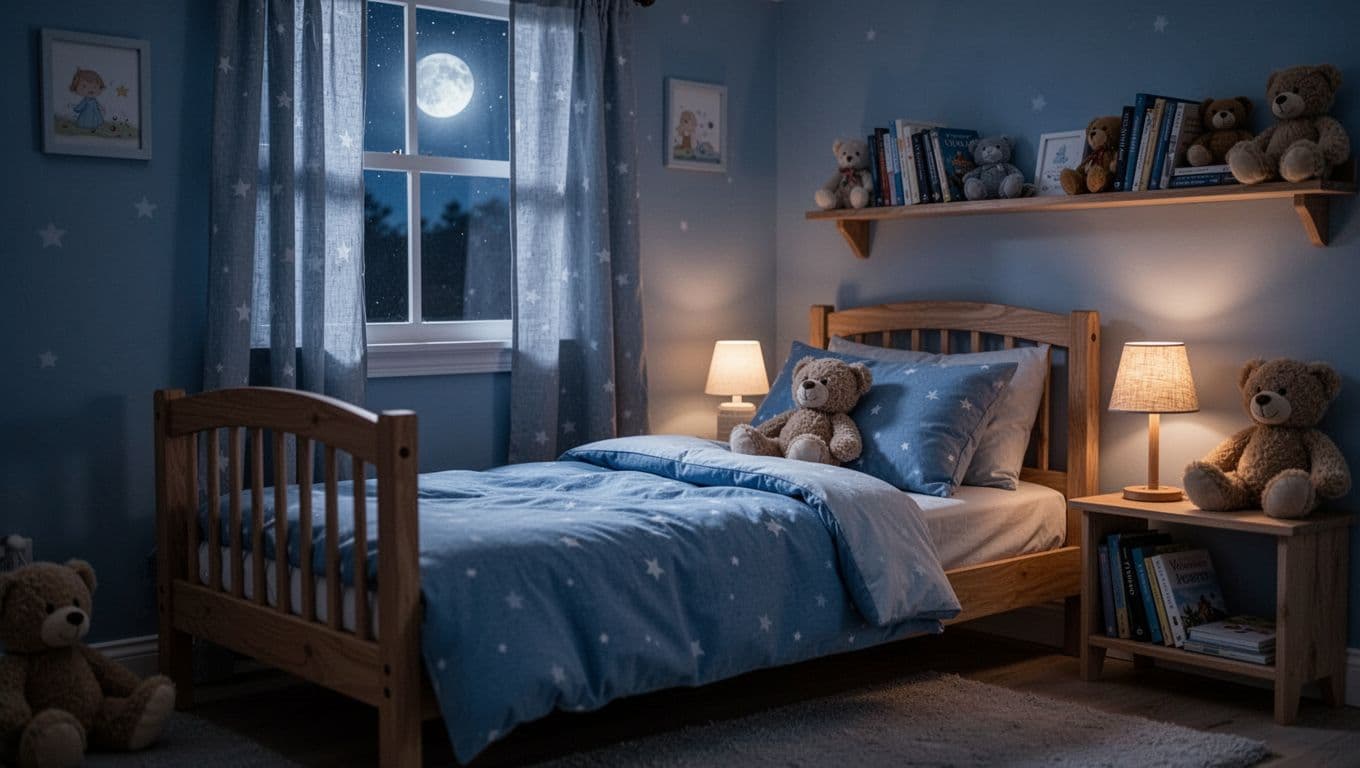
I'm not here to tell you to throw phones in the ocean. Tech is part of school, sport, and social life now. Still, a bedroom should feel like a safe, quiet cove, not a charging dock with a glowing screen.
If you want extra background on how EMFs and sleep disruption are discussed in the AV Edge world, this piece is a solid starting point: Science-backed insights on EMFs and sleep recovery.
The key is to start with changes that are low drama. Try them for a week and watch what happens. Keep it simple, and don't stack ten new rules at once.
The goal isn't "perfect". It's a calmer nervous system at night, plus fewer inputs that push sleep later.
Make the bedroom a sleep zone, not a charging station
These are the moves I'd prioritise first, because they're practical and they often work fast:
- Move phones and tablets out of the bedroom at night, even if it's just to the hallway.
- Use a plug-in alarm clock (or a basic battery one) instead of a phone alarm.
- Charge devices downstairs, so the temptation stays away from the pillow.
- Keep the WiFi router away from bedrooms where you can, even a few metres helps.
- Turn WiFi off overnight if it suits your home set-up (many routers allow a schedule).
- Use aeroplane mode on any device that must stay in the room, and keep it away from the bed.
- Never sleep with a phone under a pillow, that's heat, alerts, and RF right next to the head.
If your teen pushes back, don't go straight to a lecture. Offer a deal: "Let's run a 7-night test. If you feel no difference, we'll re-talk it." Kids respond better to experiments than sermons.
Replace screen time with a simple wind-down routine kids will actually do
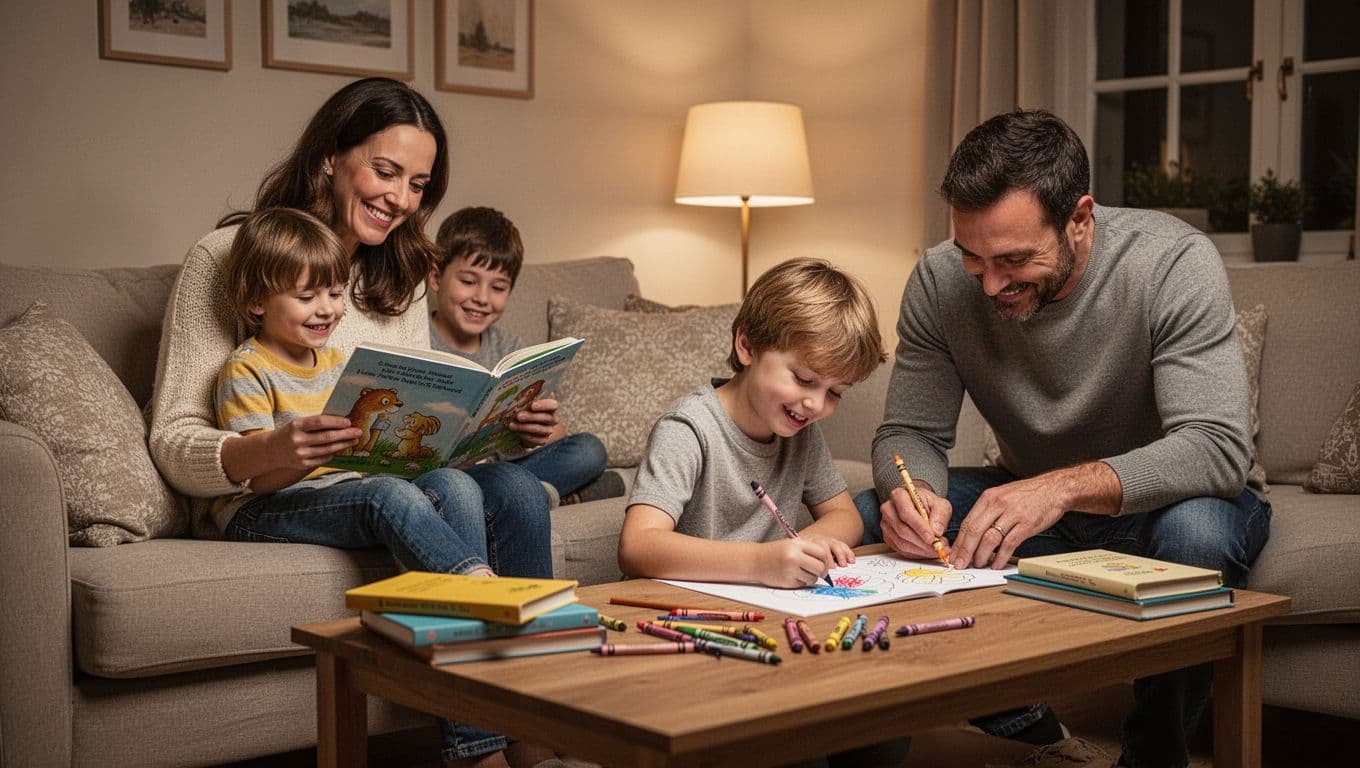
The sweet spot is usually the last 45 to 60 minutes before sleep. Think of it like letting a boat glide to shore, not slamming it onto the sand at full speed.
A few wind-down ideas that tend to land well:
- Dim the lights about an hour before bed, warmer bulbs help.
- Warm bath or shower, then into cool air, it nudges sleepiness.
- Quiet reading (paper books work best, but any calm story helps).
- Colouring or simple puzzles, especially for younger kids who need something to do with their hands.
- Gentle stretching or a short body scan, keep it under 5 minutes.
- Calming music at low volume, same playlist each night builds a cue.
Age tweaks matter. Primary school kids often do best with the same routine every night. Teens need more autonomy, so focus on two non-negotiables (screens out of bed, and a consistent wake time), then let them choose the rest.
Also, look at the "hidden gremlins". Caffeine after lunch, big late meals, and stress can all wreck sleep, even with perfect screen rules. If your child snores loudly, gasps, or seems exhausted despite long sleep, talk with a clinician.
For screen time itself, the research keeps pointing in a similar direction: more leisure screen time tends to push sleep later and make it worse. One well-known longitudinal study in Sweden linked adolescent screen time with sleep pathways and later mental health outcomes: how screen time displaces sleep pathways. That doesn't mean screens "cause" everything, but it does support reducing exposure in the evenings.
Consider AV Edge as part of your child’s sleep and wellness routine
Alongside these behaviour and environment changes, many modern families choose to layer in frequency-based support as a non-invasive extra. AV Edge wristbands and Protect Filters are designed to work in the background while your child gets on with being a kid.
For younger children in particular, our S 6" (152 mm) LEGEND Wristband is sized for the smallest wrists, so they can wear it comfortably throughout the day and night as part of a broader support plan.
“Since having the band, my nephew has slept every night. Now he believes it’s magic and he can’t sleep without it. He has been sleeping through the night since he got it. After the first week of wearing it. He has NOT done that in YEARS. Bearing in mind the doctors had given him melatonin and all sorts.” – Kelly J
You might use it to:
-
Support calm and balance in a tech-heavy world.
-
Pair with better bedtime habits, darker rooms, and reduced night-time screen use.
-
Offer a tangible, “I’m doing something about this” step that feels positive rather than punitive.
For older children and teens, AV Edge wristbands can sit alongside other recovery strategies like breathwork, grounding, evening walks, or FIR sessions, depending on what fits your family and budget.
If you’re ready to explore AV Edge for your child
If you’d like to weave AV Edge into your child’s wellness and sleep routine, here’s where most parents start:
AV Edge Bracelets
Designed with 300+ embedded frequencies, AV Edge Bracelets integrate EF Technology to: ✅ Support blood flow and oxygen delivery
✅ Help combat fatigue, soreness, and sluggish circulation
✅ Promote faster muscle repair and joint recovery

AV Edge Protect Filters
Our Cellphone Protect Filter is designed to modulate harmful frequencies emitted by smartphones and stimulate the production of ATP (Adenosine Triphosphate) in the body, promoting cellular vitality.

The Laptop/Tablet Protect Filter mitigates potentially impactful EMFs emitted by larger devices, such as laptops and tablets, ensuring that you can work and stay connected without worrying about electro-pollution.

Used together with better sleep habits and a calmer evening environment, these tools are designed to support the body’s own ability to rest, reset, and recover in a tech-driven world.
Conclusion
Sweden's registry data suggests diagnosed sleep disorders in kids have risen sharply, especially in ages 5 to 19. The study can't prove why, yet wireless tech and screens sit right in the timeline, and both have plausible ways to disturb sleep. Blue light and late-night stimulation can delay sleepiness, while RF exposure remains an active area of research, with enough uncertainty to justify simple precautions. Sleep also supports learning, mood, and memory, so this isn't just about a peaceful bedtime.
Pick one change tonight, either a device-free bedroom, WiFi off overnight, or an earlier screen cut-off, then track sleep for 7 days. If insomnia, loud snoring, or heavy daytime sleepiness keeps showing up, bring it to a healthcare professional. Your child's sleep is not a luxury, it's their foundation.
About the Author: Nathan Carter
Nathan Carter is a Level 5 Sports Performance Coach, Level 3 Personal Trainer, Level 3 British Weightlifting Coach and Master Flexibility Coach (student), with clinical and sports massage qualifications. He has spent more than two decades in health and wellness, running training facilities and wellness companies, and now leads the RestoreX pain clinic at Aspire 2.0, which combines FIR, Cryotherapy, Body Tempering, Dynamic Compression, and targeted massage.
Nathan’s approach blends biomechanics, strength training, and soft tissue therapy with a real interest in how people live, move, and recover in a high tech culture. As co‑founder of AV Edge, he is exploring wearable, frequency based technologies that may support circulation, balance, and sleep in everyday life.
Disclaimer
This content is for education only, is not medical advice, AV Edge products are not medical devices, and readers should always consult a qualified health professional before changing their lifestyle or health routine.


