
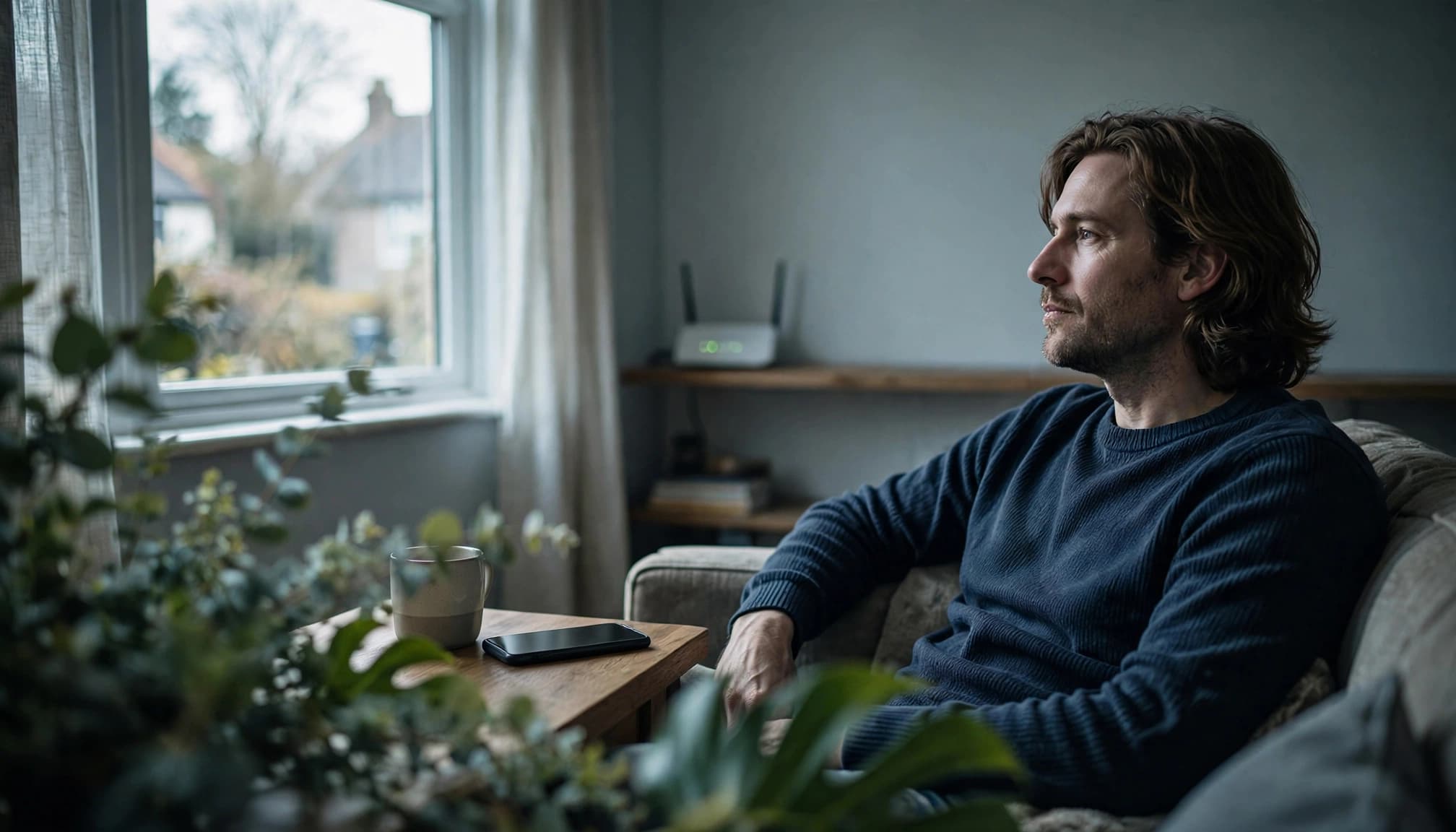
EMF hypersensitivity describes symptoms people associate with electromagnetic fields from mobile phones, Wi-Fi routers, and other electrical equipment. These can include headaches, fatigue, disturbed sleep and difficulty concentrating.
For some people, the effects reach far beyond occasional discomfort. Work becomes harder, travel feels difficult, and familiar surroundings no longer feel comfortable.
The symptoms deserve attention. Their cause is a separate question. Current evidence has not established ordinary EMF exposure as the cause, but the discussion includes personal experiences, clinical investigations and research into possible biological mechanisms.
Understanding those different strands helps explain both the concern and the scientific disagreement.
What Does EMF Hypersensitivity Feel Like?
Electromagnetic hypersensitivity (EHS) is also called electromagnetic sensitivity or idiopathic environmental intolerance attributed to electromagnetic fields (IEI-EMF).
People commonly report:
- Headaches, dizziness and nausea.
- Fatigue and disturbed sleep.
- Tingling, burning or irritated skin.
- Palpitations and tinnitus.
- Problems with memory and concentration.
Some describe symptoms while using a particular device. Others notice them in offices, shops or transport. Their accounts vary, as do the severity and timing of symptoms.
These experiences can overlap with migraine, sleep disorders, medication effects and other health problems. A useful assessment looks at the whole pattern rather than assuming one explanation from the outset.
Dr Gro Harlem Brundtland’s Experience
One of the best-known people to speak publicly about electromagnetic sensitivity is Dr Gro Harlem Brundtland, a physician, former Norwegian prime minister and former Director-General of the World Health Organization.
In 2002, while leading the WHO, she described headaches and discomfort that she associated with mobile phones.
A 2012 report in Norway’s Aftenbladet revisited her experience. Drawing on an account of remarks she made in Canada, it reported her frustration at criticism that speaking about her symptoms had frightened the public. It also described her concern that people reporting similar problems were not being taken seriously.
Brundtland was discussing her own health, not announcing a WHO finding. Nevertheless, her account brought an important tension into public view: someone could hold senior medical and public-health roles while describing experiences that the accepted evidence did not explain.
For readers experiencing similar symptoms, that history matters. The conversation is not new, and it has never involved only researchers on one side and uninformed members of the public on the other.
What Are Researchers Investigating?
Different studies ask different questions. Laboratory research explores possible mechanisms. Clinical investigations examine patients. Blinded exposure studies test whether symptoms follow an active field rather than an inactive comparison.
Each contributes something different.
Calcium Signalling and Cellular Stress
Dr Joseph Mercola has argued that EMF research should look beyond heating effects to possible changes inside cells. His article republished by Children’s Health Defense draws particularly on the work of biochemist Martin Pall.
Pall’s 2013 review proposed that some EMF effects could involve voltage-gated calcium channels. These channels help regulate calcium movement into cells.
The proposed pathway connects altered calcium signalling with nitric oxide, oxidative stress and, potentially, changes in cellular function. Mercola extends this discussion to mitochondrial health and chronic disease.
This is a biological argument, rather than simply a claim that people expect to feel unwell. However, demonstrating a cellular response under particular experimental conditions is different from showing that everyday wireless exposure causes a person’s symptoms.
Clinical Findings and Individual Responses
Researchers Dominique Belpomme and Philippe Irigaray have investigated people reporting EHS, including people who also report multiple chemical sensitivity.
Their 2020 review discusses findings involving oxidative stress, inflammation and other proposed biological markers. They argue for recognising EHS as a neurological disorder.
A separate 2011 single-participant study reported symptoms associated with changes in a low-frequency electric field during blinded testing. The participant did not consciously identify the field reliably, illustrating why detecting exposure and reacting to exposure are different questions.
These findings raise questions about individual responses and possible subgroups. They have not produced an accepted diagnostic test, and the reported markers do not establish EMFs as their cause.
What Do Blinded Studies Show?
In a double-blind provocation study, neither the participant nor the researcher assessing symptoms knows whether the exposure is active. Researchers compare active sessions with sham sessions.
A 2024 systematic review examined 41 experimental studies involving 2,874 participants. Overall, it found no consistent evidence that short-term radiofrequency exposure below regulatory limits caused the symptoms studied, including among people identifying as sensitive.
That finding weighs against a straightforward relationship between acute exposure and symptoms. Its scope is also important: short laboratory sessions cannot answer every question about prolonged exposure, delayed symptoms or every individual’s circumstances.
The nocebo effect is one explanation researchers consider. Expecting harm can produce genuine physical symptoms. This does not require conscious choice or dishonesty, and it does not establish the explanation for every person.
The WHO’s published guidance acknowledges that symptoms can be real and disabling, while finding no scientific basis for linking them to EMF exposure. UKHSA’s current guidance maintains that distinction.
Looking Beyond a Single Explanation
Magda Havas’s 2025 paper on recovery strategies proposes looking at factors that might precede reported sensitivity, including physical trauma, infections, chemical exposures and immune problems.
Her broader question is useful: what else was happening before symptoms began, and which contributing problems can be addressed? Her proposed recovery framework is not a validated EHS treatment protocol, particularly its recommendations involving detoxification and dental procedures.
A different perspective appears in BodyAlign’s discussion of Bruce Lipton. It presents health through environmental signals, energy and vibration, then connects that perspective with frequency-based products.
These perspectives ask different questions. Keeping their evidence separate allows a broader discussion without treating every explanation as equally established.
Practical Steps When You Feel Unwell Around Technology
You do not need a settled explanation before seeking help.
Start with a healthcare assessment. Tell your GP what happens, when it started and how it affects daily life. Persistent headaches, dizziness, palpitations or fatigue deserve assessment, whatever you suspect is triggering them.
Keep a brief symptom record. Include sleep, medicines, caffeine, screen use and symptoms away from suspected devices. Look for patterns without making monitoring a full-time task.
Improve the setting. Screen glare, lighting, posture, noise, ventilation and long periods without breaks can all affect comfort. At work, occupational health may help identify useful adjustments.
Keep technology choices proportionate. Wired connections, speakerphone or moving a phone away from the bed are options if you prefer them. They are personal choices, not established EHS treatments. Avoid restrictions that leave you isolated or unable to work.
Assess wellness products on their own evidence. If you explore AV Edge’s Human Wellness & Performance range, distinguish customer experiences, product testing and independent clinical evidence. AV Edge products are not medical devices or established treatments for EHS.
CBT and stress-management support may also help with distress, sleep and daily functioning. Accepting that support does not mean agreeing that your symptoms are imagined.
AV Edge: A Personal Approach to Everyday Wellbeing

For people experiencing symptoms they associate with technology, the concern is often practical: sleeping comfortably, concentrating at work and feeling more like themselves.
At AV Edge, these everyday concerns shape our interest in wellbeing and frequency-based technology. Our Legend and Advanced wristbands both incorporate our proprietary EF Technology in a wearable format. They use the same technology, so choosing between them comes down to style and fit rather than a different level of support. Our AV Edge Protect Filters attach directly to your devices, with the purpose of modulating the frequencies.
Some customers share experiences of better sleep, steadier balance, reduced discomfort and improved day-to-day wellbeing. We value those accounts because they describe changes that matter to the people experiencing them. They also help guide the questions we explore through product development and testing.
Customer experience and clinical evidence serve different purposes. Personal reports cannot establish why a change occurred or prove that a product treats electromagnetic hypersensitivity. AV Edge products are not medical devices or established EHS treatments, and they should not replace assessment of persistent symptoms.
If you are curious about our approach, explore the AV Edge Human Wellness & Performance range. Read about the technology, consider the available evidence and ask us questions before deciding whether a product belongs in your everyday wellness routine.
Taking Symptoms Seriously While Keeping Questions Open
Brundtland’s experience, the biological arguments discussed by Mercola, clinical investigations and blinded trials all belong in an informed conversation. They do not carry the same evidential weight or answer the same questions.
For someone feeling unwell, the immediate priorities are more personal: finding treatable causes, improving daily comfort and getting support that helps them participate in life.


