
It's 11:47 pm. You're half-watching a show, half-scrolling, phone close to your face, thumb doing laps like it's training for a triathlon. Or maybe it's not night-time at all. Maybe your phone lives in your pocket from breakfast to bedtime, because life is busy and you're "reachable".
Now add one more detail. Your home or work place happens to sit near a mobile phone base station. You can't see radiofrequency electromagnetic fields (RF-EMF). You can't smell them. Still, they're measurable, and your body may respond long before you feel "ill".
That's why a fresh February 2026 human study caught my eye. It didn't rely on computer models or lab mannequins. It checked real people's blood, comparing residents living very close to base stations with those living much farther away, and it also looked at heavy phone use. This isn't proof of disease or causation. It is, however, a biological signal that supports a calm, practical, reduce-exposure approach, especially if you're young and glued to your phone.
What a new 2026 blood study found about base stations and heavy phone use
The study (Laldinpuii et al., published online 6 Feb 2026 in Electromagnetic Biology and Medicine) followed a simple idea: if RF-EMF exposure is a stressor, can we spot hints of that in blood?
Researchers collected data in 2022 and 2023 in Aizawl city, India. They measured emissions around 10 mobile phone base stations operating at 900 MHz and 1800 MHz. Then they recruited two groups:
- Highly exposed group (N = 50): adults living within 60 m of the nearest base station
- Reference group (N = 51): adults living at least 300 m away, matched by age and gender
Here's the key thing I respect about their approach: they didn't just estimate exposure by distance. They measured RF power density inside homes, in the living room, using a spectrum analyser. In other words, they checked what actually reached people where they spent time.
Averages looked like this:
| Group | Distance from base station | Average RF power density in home | Approx. electric field |
|---|---|---|---|
| Highly exposed | < 60 m | ~4.6 mW/m² | ~1.3 V/m |
| Reference | ≥ 300 m | ~0.05 mW/m² | ~0.14 V/m |
They also recorded a maximum reading of about 7.22 mW/m² near one tower. Importantly, these exposures sat below the relevant government public limits used in that setting (which are set far higher, in the hundreds of mW/m² range).
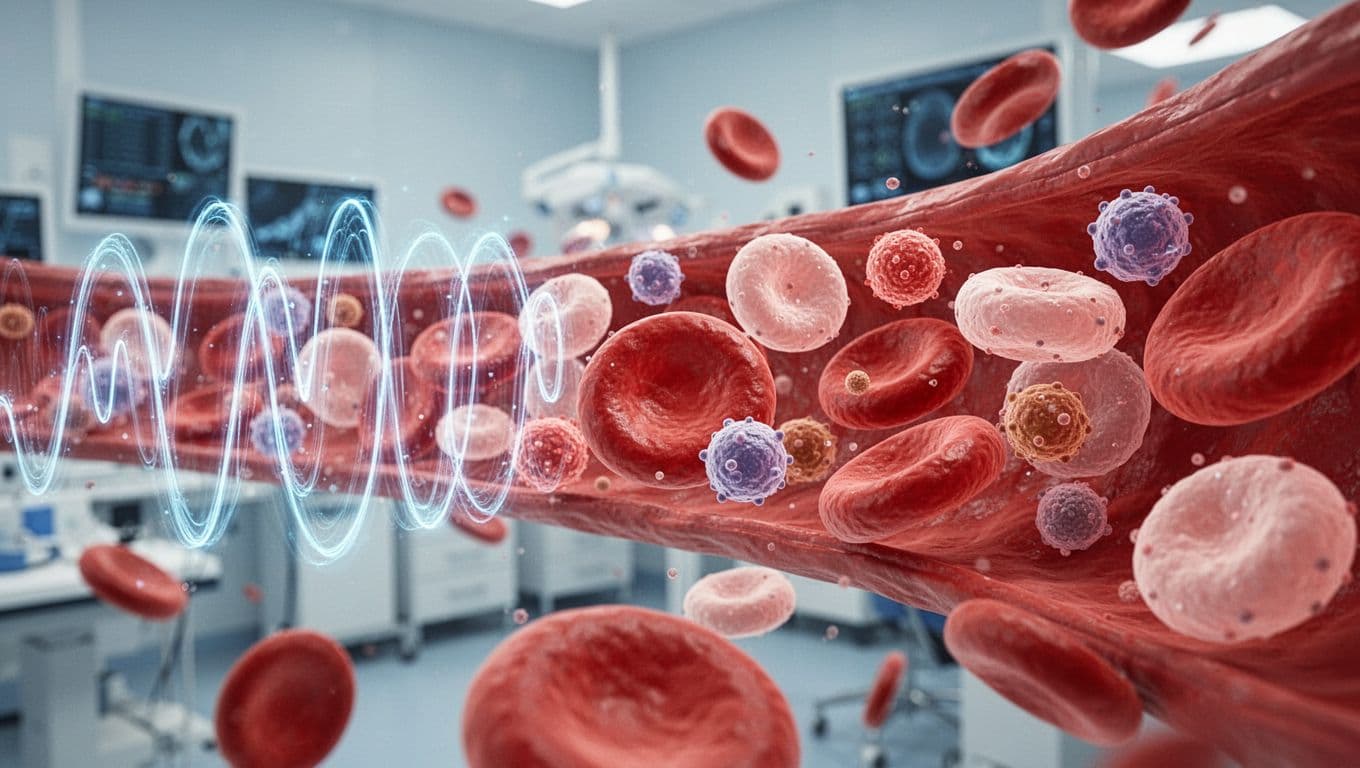
Then they ran blood work: a complete blood count (CBC) plus two stress markers, amylase and cortisol. The pattern that emerged was not "everything goes up" or "everything goes down". It was more like a messy, human response, shaped by age, sex, smoking, tower exposure, and daily phone hours.
For citations and paper details in one place, the listing on the EMF-Portal study record is a useful reference.
"Almost a quarter of those with high MPBS exposures had basophil counts above the clinical reference limits."
"Over half of those using mobile phones for 4 to 6 hours a day were found to have absolute lymphocyte counts above the upper limit."
One more line matters for real life decision-making. In their regression analysis, the authors reported that base station exposure contributed to absolute monocytes at a level comparable to smoking.
Also worth noting, cortisol and amylase did not line up with the exposure variables, so this did not look like a simple, short-term "stress spike". The signal showed up more in immune cells.
The simple question they asked: does living near a tower or using a phone for hours show up in blood?
Blood cells act like a rolling status report. They shift with infection, allergies, inflammation, and a lot of everyday pressures. That's why researchers like CBCs for early signals, even when people feel "fine".
The paper focused on three white blood cell types that are easy to explain:
- Basophils: linked with allergy-type responses and inflammation
- Monocytes: involved in clean-up work and inflammatory signalling
- Lymphocytes: key for virus defence and longer-term immune memory
The team tried to reduce obvious confounders. They asked about lifestyle, smoking, and phone habits. They also screened for other strong local sources (for example, avoiding homes near big electrical infrastructure). That doesn't "prove" RF-EMF is the cause, but it strengthens the signal.
For extra context, the same research community has also reported symptom patterns near base stations in the region. You can see the abstract and indexing on PubMed's record of the Aizawl symptom study.
The results that should make heavy users pause, especially if you are under 30
If you're under 30, this paper hits differently. The study found that the more concerning "above range" results clustered heavily in younger people, especially those clocking 4 to 6 hours a day of phone use.
"Above the reference range" does not equal a diagnosis. Labs set reference ranges based on typical values in healthy populations. A value can pop high because you had a mild virus, a rough week of sleep, or a big allergy season. Still, when a sizeable share of a group sits above the usual upper limit, and that lines up with exposure patterns, it's hard to shrug off.
The authors also raised a point that matches what many health-conscious people already suspect: biology doesn't always respond in a neat straight line. Some immune markers may rise with exposure, then later flatten or fall, as if the body adapts for a while, then runs out of buffer. That "non-linear" behaviour can make the wider research look inconsistent, even when sub-groups are clearly reacting.
If you want a more narrative, public-facing write-up of related base station work, here's an example from the EM Radiation Research Trust summary. Read it as commentary, then go back to the peer-reviewed papers for the hard details.
Do higher or lower white blood cells mean you are in danger? Not automatically, but it is a useful warning
A CBC is like the dashboard on your car. When a light flashes, you don't assume the engine is dead. You also don't ignore it and hope for the best.
White blood cells bounce around for plenty of reasons:
- a cold you barely noticed
- seasonal allergies
- hard training, poor sleep, or high work stress
- medicines (including steroids and some immune drugs)
- smoking and alcohol
- chronic inflammation, autoimmune issues, or infection
So if you've had a lab result that's "off", don't self-diagnose from a blog post. Talk it through with a clinician who can read the full picture, including symptoms and history.
Still, here's the point that matters for day-to-day choices. This 2026 study suggests RF-EMF exposure may be one more load on the system for some people, showing up as immune shifts rather than obvious symptoms. That's a very different question from "does it cook tissue". It's also a reason some people choose precaution, even when they feel fine.
A quick guide to the three cell types mentioned most in the study
Let's keep this simple and useful.
Lymphocytes help your body recognise and respond to threats, especially viruses. When lymphocytes run high, it can reflect an immune system that's switched on. Sometimes that's temporary, sometimes it reflects ongoing immune activation.
Monocytes are the clean-up crew. They move into tissue, help clear debris, and can fan the flames of inflammation if the body thinks there's a problem to solve.
Basophils play a role in histamine-driven responses, so they show up in allergy patterns and some inflammatory states.
Higher values can mean many things, including totally normal short-term changes. The "tell" is context, repetition, and patterns across groups.
Why the study being "below safety limits" still matters to health-conscious readers
Public exposure limits in many countries focus heavily on preventing heating. That's not crazy, heat is measurable and clearly harmful at high levels. The catch is that immune changes, if they occur, may be non-thermal, subtle, and shaped by duration and daily habits.
So when a study reports biological shifts at exposure levels well below those limits, it matters. Not because it proves harm, but because it suggests the current "safe enough" line may not cover every effect people care about, such as sleep quality, recovery, inflammation, or immune balance.
If you're already the sort of person who filters water, prioritises sleep, and keeps an eye on ingredient lists, a prudent RF-EMF strategy fits that same mindset. Low drama, low cost, and often pretty easy.
Practical ways to cut RF exposure without giving up your phone

I'm not here to tell you to move to a cabin and post letters. Phones are tools. The win is making them behave more like tools, and less like body-warm extensions of your nervous system.
Start with this principle: distance is your friend, and weak signal is your enemy. When signal is poor, the phone often works harder to connect, which can raise emissions.
The biggest win is distance: small changes that cut exposure fast
If you only do one thing, do this one.
Use speakerphone for calls, or use wired earbuds (some people prefer air-tube headsets for extra separation). Text more, especially for quick updates. Save long calls for times when you can create space.
Also, avoid calling in bad reception spots (lifts, underground car parks, or moving vehicles). If you must take the call, keep it short, and step outside when you can.
Carrying habits matter too. A phone pressed to the body for 10 hours a day is a different pattern than a phone in a bag. It's not about panic. It's about not making your body the default phone stand.
Pick one habit today:
- Speakerphone by default for any call over 2 minutes
- Phone in a bag, not a trouser pocket
- Text first, call second
Make nights your low-EMF recovery time
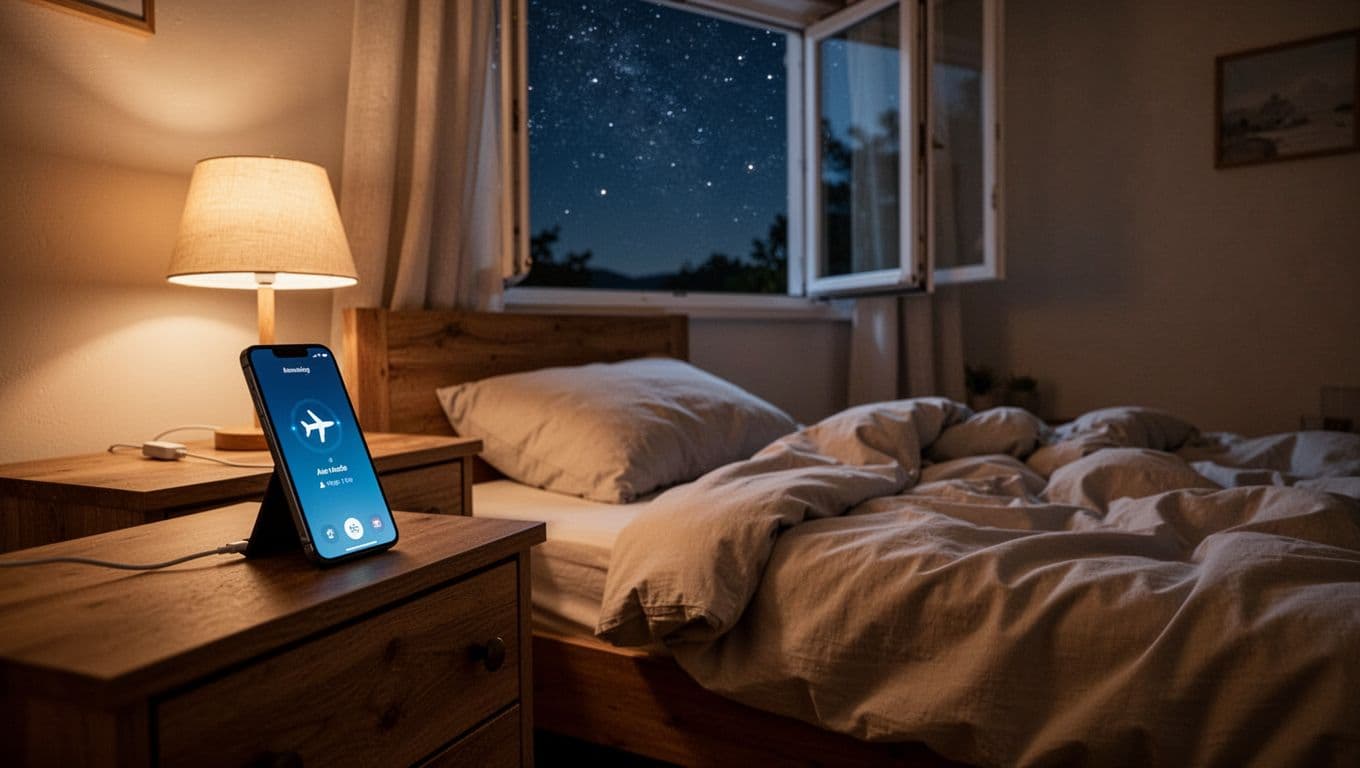
Night-time is where you can stack easy wins, because you're not using the phone anyway.
Try aeroplane mode overnight, then place the phone across the room, or leave it outside the bedroom. Don't charge it on the bedside table. If you use your phone as an alarm, a cheap battery alarm clock is a small change with a big payoff.
Wi-Fi is another simple lever. If your router sits near bedrooms, consider moving it, and switch it off overnight if that fits your household. A timer plug can handle it automatically, so you don't have to remember.
The goal here is not "zero EMF". The goal is a bedroom that feels like recovery, not like a mini phone mast.
A simple home check you can do this weekend
You don't need to become an RF engineer. You just need to notice where your hours go.
First, write down your top three spots: sofa, desk, bed. Then look around for the common sources: router, smart TV, cordless phone base, gaming console, and where you charge devices.
If you want numbers, you can borrow an RF meter (some libraries and community health groups lend them out) and use it to guide placement. Even without a meter, "move the router away from the bedroom wall" is usually a free upgrade.
If you're curious about other human research angles (beyond blood counts), there's older work looking at oxidative stress and blood lymphocytes near base stations. One accessible copy is listed here: base station exposure and lymphocyte DNA findings. Treat it as background reading, then focus on what you can control at home.
Finally, support the basics that keep your immune system steady: consistent sleep, whole foods, time outdoors, and regular movement. None of that "cancels" exposure. It does, however, raise your baseline resilience, which is the whole point of health.
If you want extra support tools, brands like AV Edge position their EF Technology products as a non-medical way to support performance and daily wellbeing around modern tech. Keep expectations grounded and focus on the big levers first: distance, night-time habits, and home set-up.
Discover AV Edge: Support for the Modern World
At AV Edge, we design practical, science-informed products to help you adapt to today’s tech-saturated environment, without the jargon or false promises.

Our range of wristbands, animal patches, and device filters are engineered using EF Technology: non-invasive frequency-based wearables that may support the body’s natural energetic systems. Though not medical devices, users regularly share feedback on improved sleep quality, steadier balance, reduced discomfort, and better day-to-day energy.

What Makes Our Technology Different?
AV Edge products work by interacting with the body’s bioelectrical signals, the same electrical currents that underpin cellular energy production and nerve function. This concept aligns with growing interest in frequency-based wellness approaches which show potential in supporting mitochondrial health and cellular resilience.

Rather than blocking electromagnetic fields (EMFs), our focus is on helping the body stay responsive and resilient in their presence.
Trusted by Champions, Used by Thousands
From seasoned athletes like Olympic medallist William Fox-Pitt MBE and senior golf professional Gary Wolstenholme MBE to everyday customers seeking better balance and sleep, AV Edge has become a go-to for those who want natural support that fits into daily life.
Reported Benefits from Our Community Include:
-
Less dizziness and motion sensitivity
-
Calmer, more restorative sleep
-
Reduced anxious tension
-
Greater postural awareness and stability
As a growing company, we’re committed to ongoing research partnerships and data collection to better understand how our technology may support wellness in a world full of invisible stressors.
Conclusion: a calm signal, and a smart next step
Your blood cells don't lie, but they also don't shout. They whisper patterns. This February 2026 study suggests that living very close to mobile phone base stations, and using a mobile for 4 to 6 hours a day, can line up with shifts in certain white blood cells, especially in people under 30, even at exposures below public limits. That's not proof of disease or causation. It is enough to justify prudent steps that cost little and fit normal life.
Choose one change this week, then make it your default. Share it with someone you care about, because teens and young adults are the heavy users now. If you want to read the source, look up Laldinpuii et al., Electromagn Biol Med, published online 6 Feb 2026, doi: 10.1080/15368378.2026.2623473, and keep building your own low-exposure habits from there.
About the Author: Nathan Carter
Nathan Carter is a Level 5 Sports Performance Coach, Level 3 Personal Trainer, Level 3 British Weightlifting Coach and Master Flexibility Coach (student), with clinical and sports massage qualifications. He has spent more than two decades in health and wellness, running training facilities and wellness companies, and now leads the RestoreX pain clinic at Aspire 2.0, which combines FIR, Cryotherapy, Body Tempering, Dynamic Compression, and targeted massage.
Nathan’s approach blends biomechanics, strength training, and soft tissue therapy with a real interest in how people live, move, and recover in a high tech culture. As co‑founder of AV Edge, he is exploring wearable, frequency based technologies that may support circulation, balance, and sleep in everyday life.
Disclaimer
This content is for education only, is not medical advice, AV Edge products are not medical devices, and readers should always consult a qualified health professional before changing their lifestyle or health routine.


